Managing food allergens involves more than checking ingredient labels. Every food business needs reliable procedures to identify allergens, prevent cross-contact and communicate accurate information to customers.
Allergen management in food businesses means identifying allergenic ingredients, controlling risks during food preparation, keeping ingredient records accurate and ensuring customers receive the information they need.
For UK food supervisors, this includes understanding Natasha’s Law, checking kitchen procedures and making sure staff follow consistent allergen-handling practices.
Whether you supervise a café, restaurant, bakery or catering operation, knowing how these responsibilities work together helps maintain food safety and customer confidence.
Ready to Take Your Food Safety Knowledge Further?
Study HACCP, food contamination, allergen management, temperature control and hygiene supervision in the Food Hygiene and Safety Level 3 online course. Ideal for kitchen supervisors, catering managers and food business professionals.
What Is Allergen Management in a Food Business?
Allergen management is the process of identifying, controlling and communicating food allergens throughout food preparation, storage, packaging and service.
It involves checking ingredients, maintaining accurate records, preventing unintended allergen transfer and ensuring employees understand how to respond to customer allergy enquiries.
The 14 Food Allergens Businesses Must Identify
UK food businesses must provide information about 14 regulated allergens when they are present as ingredients in food.
According to the Food Standards Agency’s allergen guidance, these include:
| Allergen | Common Food Examples |
|---|---|
| Celery | Soups, stocks and seasonings |
| Cereals Containing Gluten | Wheat, rye, barley and oats |
| Crustaceans | Prawns, crab and lobster |
| Eggs | Mayonnaise, cakes and sauces |
| Fish | Fish sauce and seafood dishes |
| Lupin | Certain flours and bakery products |
| Milk | Cheese, butter and cream |
| Molluscs | Mussels, oysters and squid |
| Mustard | Dressings, sauces and marinades |
| Peanuts | Satay sauces and confectionery |
| Sesame | Bread, tahini and dressings |
| Soybeans | Tofu, soy sauce and processed foods |
| Sulphur Dioxide and Sulphites | Certain dried fruits and drinks, above the specified threshold |
| Tree Nuts | Almonds, walnuts, cashews and hazelnuts |
Supervisors should consider allergens in sauces, garnishes, marinades and compound ingredients, not just the main ingredients of a dish.
Customers may also be allergic to ingredients outside these 14 regulated categories, making clear communication equally important.
Natasha's Law and UK Allergen Labelling Requirements
Natasha’s Law introduced additional labelling requirements for food prepacked for direct sale (PPDS), which took effect across the UK on 1 October 2021.
Understanding which foods fall under these requirements is an important part of allergen management.
What Does Natasha's Law Require?
Under Natasha’s Law, qualifying PPDS foods must display:
- The name of the food.
- A complete ingredients list.
- Any regulated allergens used as ingredients clearly emphasised within that list.
PPDS generally refers to food packaged at the same premises before customers select or order it.
For example, sandwiches prepared, packaged and displayed in a café before customers choose them may qualify as PPDS food.
The Food Standards Agency’s PPDS labelling guidance explains how businesses should identify affected products and present the required information.
Supervisors should ensure labels reflect the actual ingredients, particularly when suppliers, recipes or products change.
PPDS, Prepacked and Non-Prepacked Food: What's Different?
Allergen information requirements depend on how food is packaged and supplied.
| Food Category | Example | Main Requirement |
|---|---|---|
| PPDS | Café sandwich packed before selection | Food name and full ingredients list with regulated allergens emphasised |
| Prepacked | Manufacturer-packaged supermarket meal | Relevant prepacked food labelling requirements |
| Non-prepacked | Restaurant meal served on a plate | Required allergen information must be available to customers |
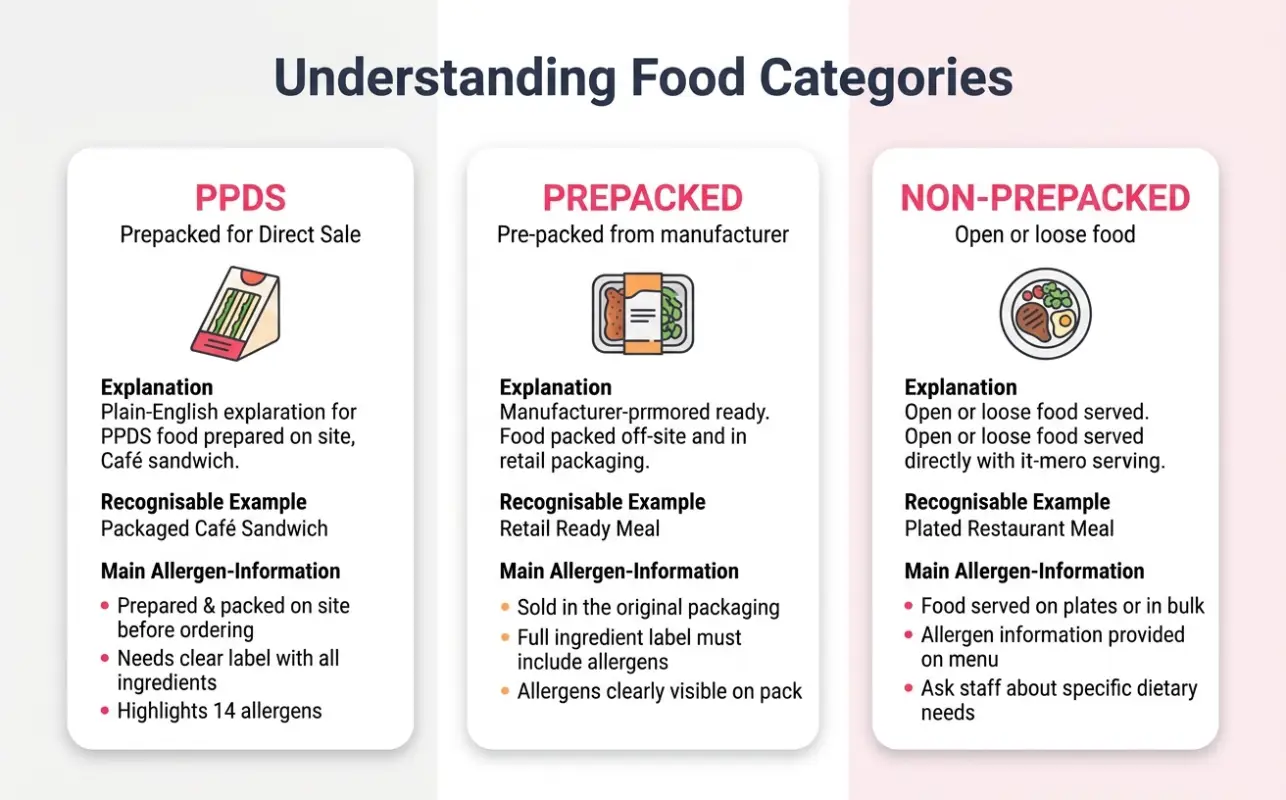
For non-prepacked foods, information may be provided in writing or verbally, with appropriate signposting where necessary.
For food ordered online or by telephone, allergen information must be available before the purchase is completed and when the food is delivered.
Businesses in Scotland should also follow the relevant Food Standards Scotland allergen labelling guidance.
What Must Food Supervisors Do to Manage Allergens Safely?
Food supervisors help ensure allergen procedures are followed consistently. Their role includes checking ingredient information, monitoring preparation practices, supporting staff and reviewing procedures when changes occur.

Check Ingredients, Suppliers and Allergen Records
Accurate allergen management starts with understanding what each dish contains.
Supervisors should check supplier specifications, food labels and recipe information, especially when ingredients are substituted or menus are updated.
An allergen matrix is a practical way to record which allergens appear in individual dishes.
Useful procedures include:
- Checking ingredient information when deliveries arrive.
- Keeping recipe and allergen records current.
- Reviewing supplier substitutions before using ingredients.
- Updating allergen information when recipes change.
- Confirming who approves changes before food is served.
Although a particular allergen matrix template is not universally required by law, accurate allergen information is essential.
These checks also support the wider process of documenting food safety hazards and controls when developing a HACCP plan.
Prevent Allergen Cross-Contact During Preparation
Allergen cross-contact occurs when an allergen unintentionally transfers from one food, ingredient or surface to another.
For example, using the same knife for peanut butter and another sandwich filling could transfer peanut residue.
Supervisors should ensure staff:
- Store allergenic ingredients appropriately.
- Use suitably cleaned utensils and equipment.
- Follow effective cleaning procedures between preparation tasks.
- Consider allergen transfer through shared cooking oil.
- Maintain clear preparation procedures for allergy-related orders.
Alongside allergen-specific controls, following practical food safety tips for commercial kitchens can help teams maintain consistent hygiene and preparation standards.
Cooking food at high temperatures does not reliably remove allergens. Similarly, removing a visible ingredient may leave allergen residues behind.
These controls should form part of the business’s wider food safety procedures. The Safer Food, Better Business approach can help smaller food businesses organise and maintain practical food safety management systems.
Make Sure Staff Communicate Allergen Information Correctly
Accurate ingredient information must reach the people preparing, serving and purchasing food.
Front-of-house staff should know where to find allergen details and how to communicate customer requests to kitchen employees.
Kitchen teams should confirm the ingredients and preparation arrangements before accepting allergy-related requests.
When staff cannot verify an ingredient or preparation method, the customer should receive an accurate explanation rather than an assumption.
Takeaway businesses also need reliable communication between ordering platforms, kitchen teams and delivery operations.
The FSA allergen checklist for food businesses provides practical checks for managers, kitchen employees and customer-facing staff.
Train Staff and Review Allergen Procedures
Food businesses must ensure employees receive appropriate allergen training for their responsibilities.
Supervisors should check that employees understand:
- The ingredients and allergens relevant to their work.
- How to prevent allergen cross-contact.
- Where to find accurate allergen information.
- How to communicate allergy requests.
- Who to contact when clarification is needed.
Training should be supported by everyday supervision and refreshed when ingredients, menus or procedures change.
Allergen monitoring is also part of a food hygiene supervisor’s wider daily responsibilities, alongside maintaining hygiene standards and checking food safety procedures.
Practical Example: Managing an Allergen Risk in a UK Café
Consider a café that changes its sandwich bread supplier.
The original bread did not contain sesame, but the replacement product includes sesame seeds. The café’s allergen matrix and preprinted sandwich labels still reflect the previous recipe.
This situation demonstrates why supervisors need a reliable procedure for managing ingredient changes.
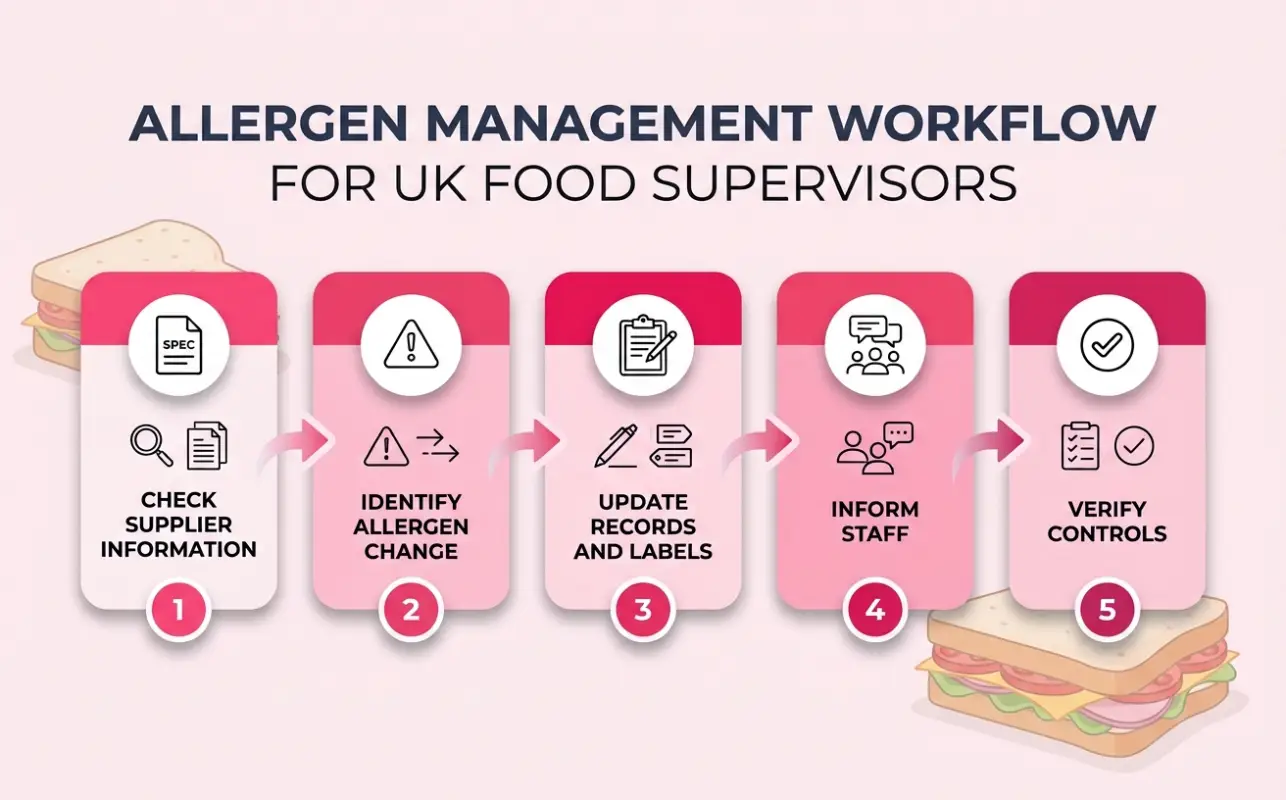
When a Supplier Changes an Ingredient
The supervisor should follow five practical steps.
Check the Supplier Information
Review the replacement bread’s ingredient list and allergen declarations to identify any differences.
Identify the Allergen Change
Confirm that sesame is now present and consider whether preparation or storage arrangements need updating.
Update Allergen Records and Labels
Revise the allergen matrix, recipe information and any affected PPDS labels before the sandwiches are offered for sale.
Communicate the Change
Inform kitchen and front-of-house employees so everyone has accurate information about the replacement ingredient.
Verify the Updated Procedures
Check that labels match the ingredients and staff understand the revised preparation requirements.
This process connects supplier management, record keeping, labelling and communication.
It also demonstrates how allergen controls fit within the seven principles of HACCP, which provide a broader framework for identifying and managing food safety hazards.
Allergen Management Checklist for Food Supervisors
A practical checklist helps supervisors monitor allergen controls and identify where updates are needed.
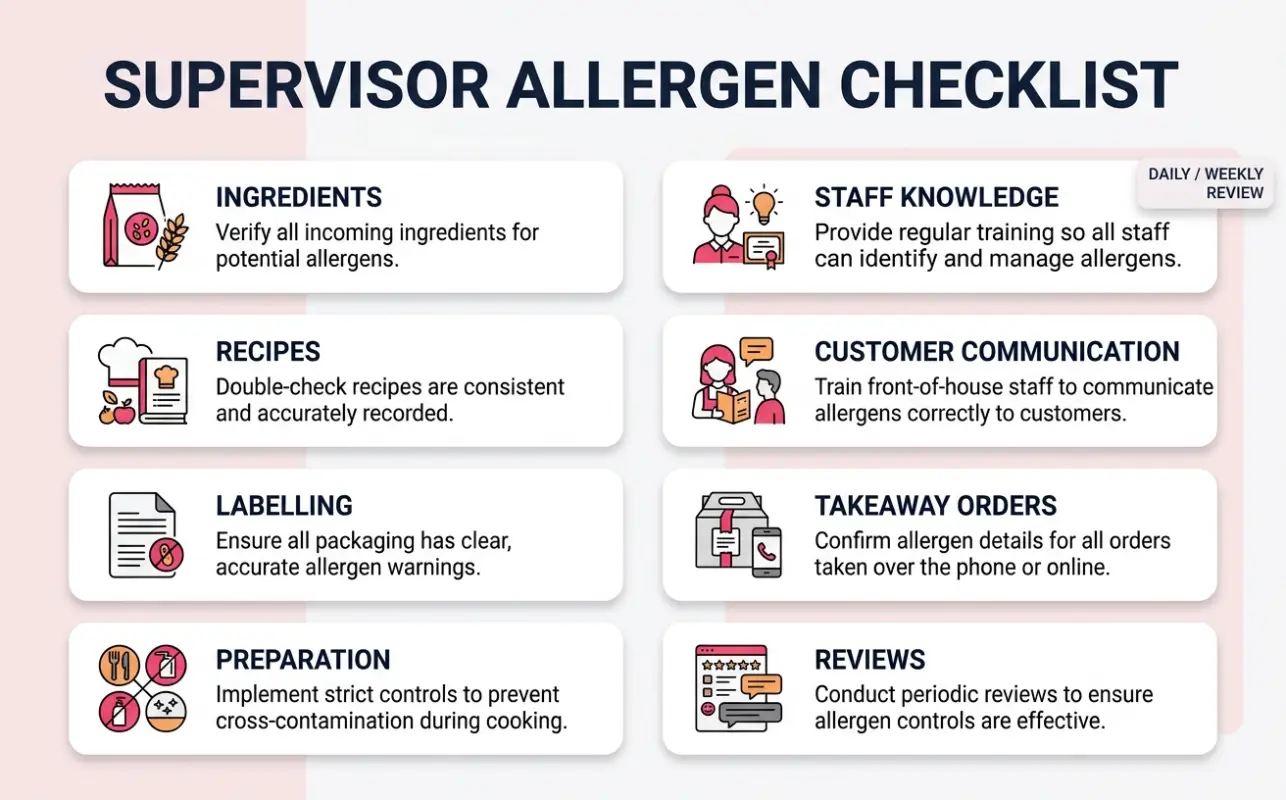
| Supervisor Check | What to Confirm |
|---|---|
| Ingredients | Supplier specifications and ingredient records are accurate |
| Recipes | Allergen information reflects the food being prepared |
| Labelling | Relevant PPDS products have correct labels |
| Preparation | Cleaning and cross-contact controls are followed |
| Staff Knowledge | Employees understand allergen procedures |
| Customer Communication | Allergy requests reach the appropriate staff |
| Takeaway Orders | Allergen information is available at the required stages |
| Reviews | Ingredient changes and identified issues are addressed |
Supervisors can also use the FSA’s official allergen matrices, icons and posters to support ingredient documentation and customer communication.
Regular reviews are particularly useful when introducing new menu items, changing suppliers, training employees or updating kitchen procedures.
The aim is to make allergen controls part of normal food preparation and service rather than treating them as a separate administrative task.
Conclusion: Make Allergen Safety Part of Everyday Supervision
Effective allergen management depends on accurate ingredient information, appropriate labelling, safe preparation and clear staff communication.
Food supervisors bring these responsibilities together by monitoring procedures, reviewing changes and supporting employees in their everyday work.
For those interested in developing broader supervisory knowledge, Coursegate’s Food Hygiene and Safety Level 3 training covers relevant topics such as allergens, contamination prevention, safe food handling and hygiene supervision.
By making allergen checks part of routine food safety management, businesses can provide customers with reliable information and maintain consistent working practices.
Frequently Asked Questions About Allergen Management
Does Natasha's Law Apply to All Food Businesses?
Natasha's Law applies to businesses supplying qualifying prepacked for direct sale food. Businesses supplying other food categories must still comply with the relevant allergen information requirements.
Is Allergen Training a Legal Requirement for Food Handlers?
Food businesses must ensure staff receive appropriate allergen training. However, UK law does not universally require every food handler to hold a particular commercial allergen-training certificate.
Training should reflect employees' responsibilities and the activities carried out within the business.
Can Allergen Information Be Given Verbally?
Yes. For certain non-prepacked foods, allergen information can be provided verbally, with appropriate signposting and access to reliable ingredient information.
PPDS products have specific written labelling requirements.
How Often Should Food Businesses Review Allergen Information?
Allergen information should be reviewed whenever ingredients, suppliers, recipes or preparation processes change.
Routine checks also help supervisors maintain accurate records and ensure staff are working with current information.


- All Courses
- Accounting & Finance64
- Admin, Secretarial & PA45
- Audio Books (Audio Course)100
- Business Skills159
- Design76
- Digital Marketing49
- DIY (Do It Yourself)60
- Employability245
- Food Hygiene & Safety18
- Health & Fitness68
- Health & Safety114
- Health & Social Care191
- Human Resource51
- It & Software Skills116
- Language27
- LIFESTYLE88
- MAKEUP & BEAUTY49
- Management132
- Marketing63
- Massage & Physiotherapy18
- Microsoft Office64
- Nonprofit & Charity36
- On Demand Courses54
- Personal Development142
- Photography34
- Psychology & Counselling99
- SEN (Special Educational Needs)24
- Teaching and Education100