
An SEN teaching assistant interview is your opportunity to show how you would support pupils with different learning needs. Schools want more than enthusiasm. They need candidates who can communicate patiently, work with teachers and respond appropriately to difficult classroom situations.
The right preparation makes these questions easier to approach.
Common SEN teaching assistant interview questions cover motivation, safeguarding, behaviour support, communication, teamwork and supporting pupils with special educational needs. Strong answers explain what you would do, why it matters and when you would seek guidance. Preparing honest examples from your experience can help you respond clearly and confidently.
Below are 12 realistic interview questions with model answers, followed by practical preparation advice for applicants in England. The answers are illustrations, not scripts to memorise.
Preparing for an SEN Teaching Assistant Interview?
Build your knowledge of TA responsibilities, classroom strategies and SEN support with Course Gate's Level 3 Teaching Assistant & SEN Certificate.
- Teaching assistant responsibilities and classroom strategies
- Supporting pupils with special educational needs (SEN)
- About 3 hours 55 minutes of learning, study at your own pace
What Do Schools Look for in an SEN Teaching Assistant Interview?
Schools generally look for candidates who understand that pupils with special educational needs and disabilities (SEND) require thoughtful, individualised support.
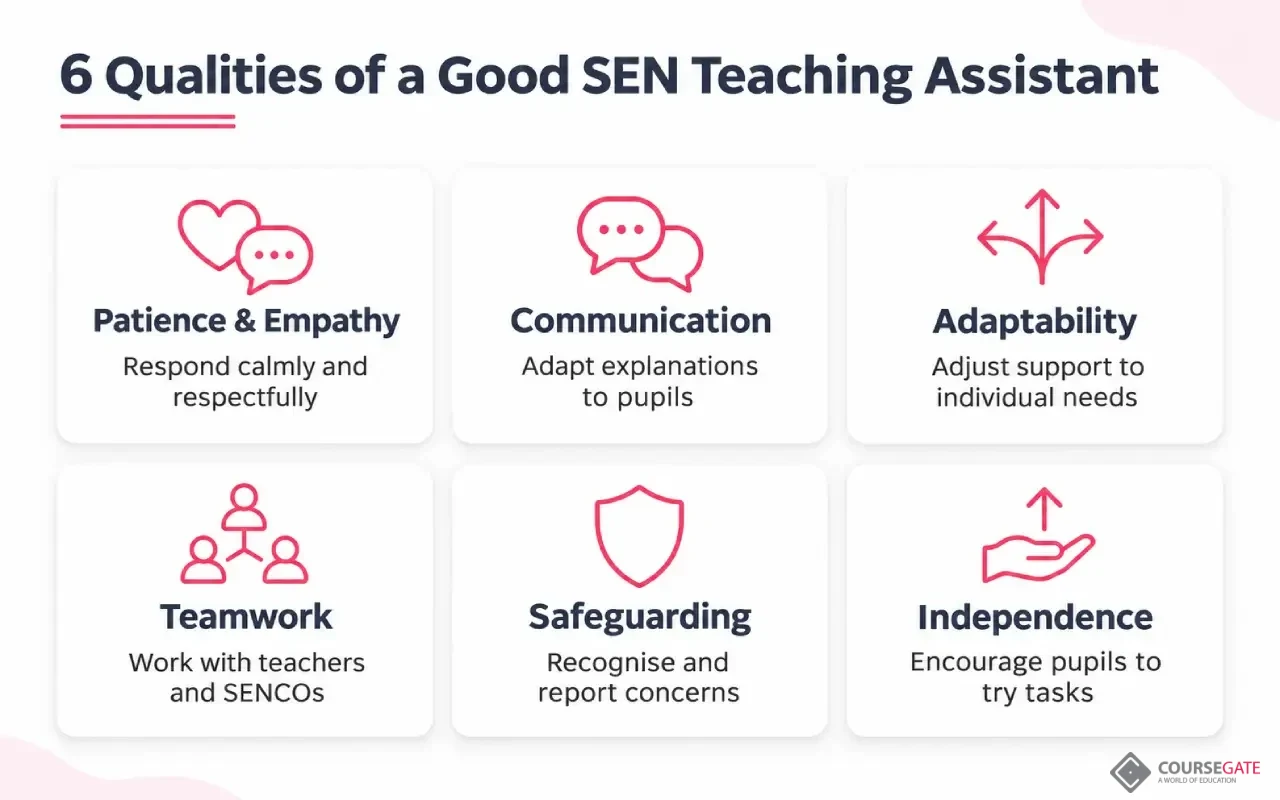
Your answers should demonstrate:
- Patience and empathy: Responding calmly and respecting pupils' feelings.
- Clear communication: Adapting explanations to individual needs.
- Adaptability: Recognising that strategies work differently for different pupils.
- Teamwork: Following the guidance of teachers and the special educational needs coordinator (SENCO).
- Safeguarding awareness: Recognising concerns and reporting them appropriately.
- Encouraging independence: Helping pupils participate without automatically doing tasks for them.
You should also understand the boundaries of the position. Teaching assistants support teaching and learning under appropriate direction; they do not independently replace teachers or make clinical assessments.
For a fuller explanation of the role, see our guide to SEN teaching assistant duties.
8 Common SEN Teaching Assistant Interview Questions and Model Answers
These SEN teaching assistant interview questions reflect situations applicants may encounter in mainstream schools and specialist settings. Adapt each response to the job description and your genuine experience.
1. Why do you want to be an SEN teaching assistant?
What the interviewer wants: Genuine motivation and an understanding of inclusive education.
Model answer:
“I want to support pupils who may need additional help to participate confidently in school. I understand that each child has different strengths and needs, so I would take time to get to know them and follow their agreed support arrangements. I would find it rewarding to help pupils become more independent and recognise their progress.”
Why it works: The answer focuses on pupils’ needs rather than personal satisfaction alone. You can strengthen it by mentioning a genuine experience that influenced your interest.
2. What qualities make a good SEN teaching assistant?
What the interviewer wants: Relevant personal qualities supported by practical judgement.
Model answer:
“I think patience, communication and adaptability are particularly important. A pupil might need additional processing time or a different explanation before completing an activity. I would remain patient, listen carefully and adjust my support with guidance from the teacher. I also believe teamwork is essential because consistent support helps pupils feel secure.”
Why it works: It connects qualities to realistic classroom behaviour instead of simply listing positive characteristics.
3. How would you support a pupil with an EHCP?
What the interviewer wants: Basic understanding of Education, Health and Care Plans (EHCPs) and professional responsibilities.
Model answer:
“I would familiarise myself with the relevant support arrangements and the pupil’s agreed goals. I would work with the teacher and SENCO to understand my responsibilities, provide consistent support and share observations about the pupil’s progress. If something was not working, I would discuss it with the appropriate staff rather than changing the provision independently.”
Why it works: The response demonstrates cooperation, accountability and respect for agreed arrangements.
England’s Department for Education provides statutory SEND Code of Practice guidance covering the support system for children and young people aged 0–25.
4. How would you support a pupil with autism?
What the interviewer wants: An individualised approach rather than assumptions about autism.
Model answer:
“I would first find out how the pupil communicates, what helps them feel comfortable and whether they have an agreed support plan. Depending on their preferences, I might use clear instructions, visual information or advance notice of changes. I would observe their responses and work with the teacher to ensure the support suits that particular pupil.”
Why it works: It recognises that autistic pupils have different needs, preferences and strengths.
Avoid suggesting that every autistic pupil benefits from exactly the same approach.
5. How would you help a pupil with ADHD stay focused?
What the interviewer wants: Practical support that respects the pupil’s needs.
Model answer:
“I would follow the pupil’s existing support arrangements and consider breaking an activity into manageable steps. Clear instructions, visual reminders or agreed movement opportunities might help, depending on the individual. I would provide encouragement without drawing unnecessary attention to the pupil and discuss any difficulties with the teacher.”
Why it works: It demonstrates flexibility and avoids presenting one strategy as a solution for every pupil with ADHD.
6. How would you encourage a pupil to work independently?
What the interviewer wants: An understanding that effective support should encourage learning rather than create unnecessary dependence.
Model answer:
“I would give the pupil an opportunity to attempt the task before stepping in. If they needed help, I might provide a prompt, model one example or break the instructions into smaller steps. As their confidence improved, I would gradually reduce the assistance while remaining available.”
Why it works: This reflects scaffolding, where support is adjusted as learners develop confidence and independence.
The Education Endowment Foundation’s teaching assistant guidance supports effective scaffolding and pupil independence.
7. How would you build trust with an anxious pupil?
What the interviewer wants: Emotional awareness, communication and consistency.
Model answer:
“I would approach the pupil calmly, listen without pressure and give them time to communicate. I would try to understand what helps them feel comfortable and follow any agreed support strategies. By being consistent, respecting their feelings and recognising small achievements, I would aim to develop a positive relationship.”
Why it works: The answer demonstrates sensitivity without assuming that the teaching assistant should diagnose or independently treat anxiety.
8. How would you work with the teacher and SENCO?
What the interviewer wants: Collaboration and a clear understanding of professional boundaries.
Model answer:
“I would communicate regularly with the class teacher about learning activities and the support pupils need. I would follow agreed guidance, share relevant observations and raise concerns through the appropriate channels. When the SENCO provides recommendations, I would work with the teacher to apply the support relevant to my role.”
Why it works: It demonstrates that successful SEN support depends on coordinated decisions and communication rather than independent action.
4 SEN Teaching Assistant Scenario-Based Interview Questions
Scenario questions test how you apply your knowledge when something unexpected happens. A good answer should explain your immediate response, relevant school procedures and when another staff member needs to become involved.
9. What would you do if a pupil became distressed or overwhelmed?
Scenario: A pupil becomes visibly upset during a noisy classroom activity.
Model answer:
“I would remain calm and consider the pupil’s immediate safety. I would use a reassuring tone, avoid overwhelming them with questions and follow their agreed support or behaviour plan. If appropriate, I might offer a quieter activity or space in line with school procedures. I would involve the teacher and seek additional assistance if necessary.”

Why it works: The response prioritises safety, dignity and appropriate support.
Avoid saying: “I would immediately discipline the pupil.”
Distress may have several causes. A helpful response considers the situation rather than assuming the pupil is deliberately being disruptive.
10. What would you do if a pupil disclosed a safeguarding concern?
Scenario: A pupil tells you something worrying and asks you to keep it secret.
Model answer:
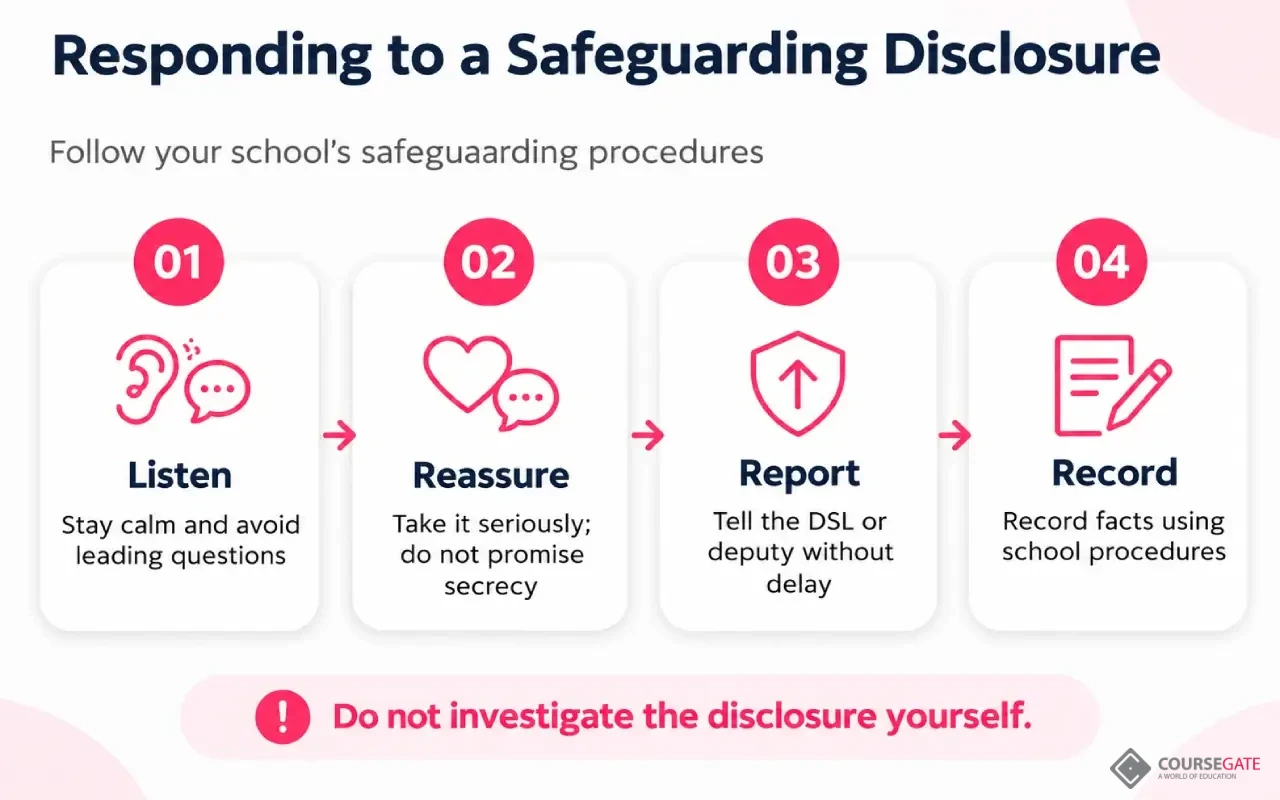
“I would listen calmly, take the pupil seriously and avoid asking leading questions. I would explain that I cannot promise secrecy because their safety matters. I would report the concern immediately to the designated safeguarding lead or deputy, following school procedures, and record the information appropriately. I would not investigate the matter myself.”
Why it works: It demonstrates appropriate safeguarding responsibilities and professional boundaries.
Under Keeping Children Safe in Education 2026, all school staff in England must read Part One in full and follow their school’s safeguarding procedures. Concerns must be acted on promptly and reported to the designated safeguarding lead (DSL) or deputy without delay.
If a child is in immediate danger, urgent protective action is required, including contacting emergency services where necessary.
11. What would you do if a pupil refused to participate in an activity?
Scenario: A pupil repeatedly refuses to begin their classroom task.
Model answer:
“I would remain calm and try to identify whether the pupil was finding the task confusing, overwhelming or uncomfortable. I might clarify the instructions, offer an appropriate choice or use an agreed support strategy. I would avoid creating a confrontation and involve the teacher if the difficulty continued.”
Why it works: It focuses on possible barriers to participation rather than automatically treating refusal as poor behaviour.
Remember that support should remain consistent with the school’s policies and the pupil’s individual arrangements.
12. How would you support two pupils with different learning needs?
Scenario: You are supporting two pupils during the same classroom activity.
Model answer:
“I would discuss the activity and agreed adjustments with the teacher beforehand. One pupil might benefit from visual instructions, while another may need shorter verbal explanations or additional processing time. I would balance their support needs, encourage independent participation and communicate any concerns to the teacher.”
Why it works: It shows that inclusive support requires flexibility without losing sight of the learning objective.
For more detailed support strategies for pupils with SEND, see How to Support Pupils With SEND.
How to Answer SEN TA Interview Questions With No Experience
You can give effective SEN teaching assistant interview answers without inventing classroom experience.
Start by identifying relevant skills from previous work, volunteering, education or caring responsibilities. Customer service, for example, may provide genuine examples of patience, communication and responding calmly to challenging situations.
For experience-based questions, the STAR method can help structure your response:
- Situation: Explain the circumstances.
- Task: Describe your responsibility.
- Action: Explain what you personally did.
- Result: Share the outcome and what you learnt.
Use examples that genuinely happened. If you have not worked in a school, acknowledge this and explain how your transferable skills could apply.
Reviewing your education CV may also help you identify experiences worth discussing.
How to Prepare for an SEN Teaching Assistant Interview
Effective SEN teaching assistant interview preparation begins with understanding the school and the advertised position.
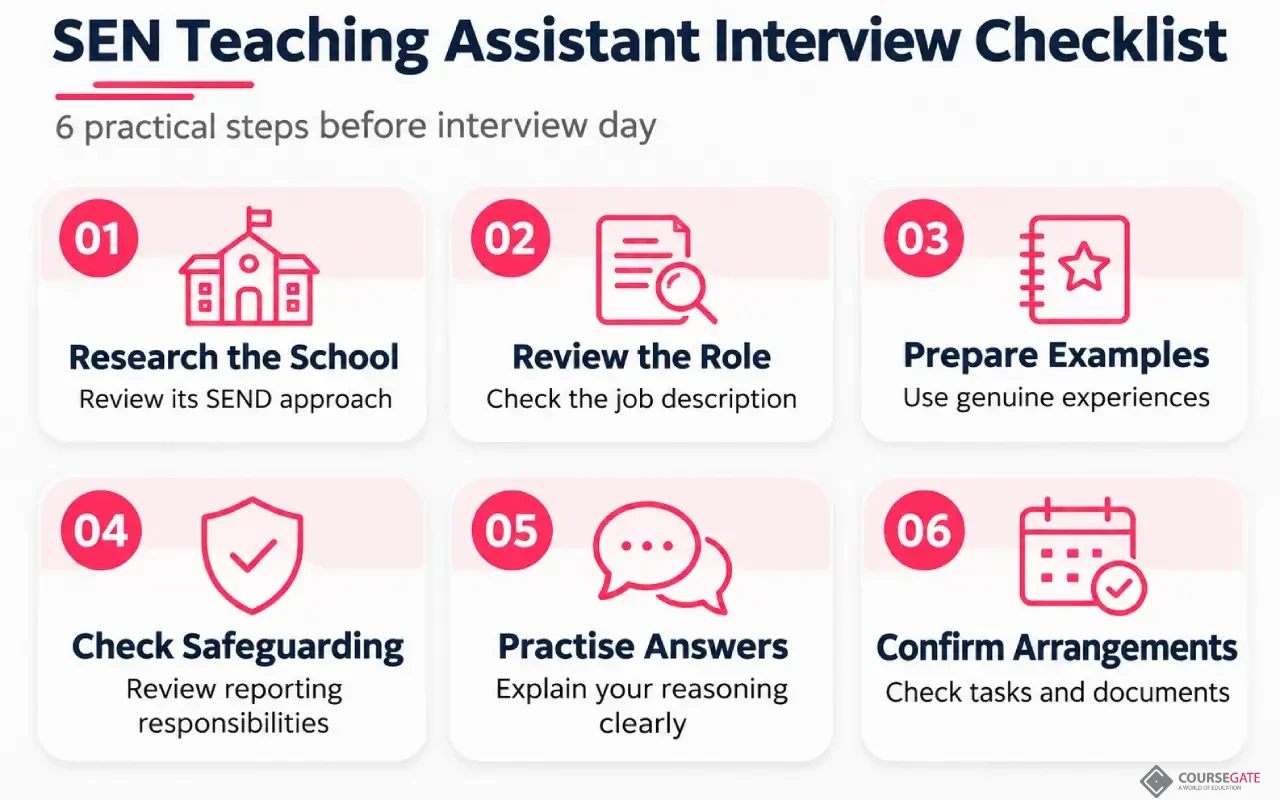
Use this checklist before your interview:
- Research the school. Review its website, SEND information, values and relevant policies.
- Study the job description. Identify the responsibilities and qualities the employer specifically requests.
- Prepare genuine examples. Choose situations demonstrating communication, patience, teamwork or problem-solving.
- Review safeguarding responsibilities. Understand reporting procedures and the importance of confidentiality.
- Practise your responses aloud. Focus on explaining your reasoning rather than memorising sentences.
- Check interview arrangements. Confirm whether a practical activity, classroom observation or particular documents are required.
Some vacancies use the titles learning support assistant and teaching assistant differently. Always check the responsibilities rather than relying on the title alone.
For more detail about these roles, see our guide to learning support assistant vs teaching assistant.
Questions to Ask at the End of an SEN TA Interview
An interview is also an opportunity to understand how the school supports its pupils and staff.
Consider asking:
- How do teaching assistants and the SENCO work together?
- What induction or professional development is available to new teaching assistants?
- How does the school encourage consistent SEND support across classrooms?
- What would successful performance look like during the first few months?
Choose two or three questions that genuinely interest you. Avoid asking for information already clearly explained in the job advertisement.
Strengthen Your SEN Teaching Assistant Knowledge
Interview preparation can highlight areas where additional subject knowledge would be useful.
Coursegate’s Level 3 Teaching Assistant & SEN Certificate covers teaching assistant responsibilities, classroom strategies, professional standards and supporting pupils with special educational needs.
This CPD-accredited online course contains 3 hours and 55 minutes of learning content, with one-year access. A CPD certificate is available upon successful completion, with certificate options subject to the course provider’s terms.
It is professional development training, not a guaranteed route into employment or a verified Ofqual-regulated qualification.
Strengthen Your SEN Knowledge Before Interview Day
Study online with one-year access, with a CPD certificate available on successful completion.
- Teaching assistant responsibilities and classroom strategies
- Supporting pupils with special educational needs (SEN)
- About 3 hours 55 minutes of learning, study at your own pace
FAQs About SEN Teaching Assistant Interviews
How long does an SEN teaching assistant interview usually last?
There is no single standard interview duration. The time depends on the school's recruitment process and whether practical tasks or classroom observations are included. Check your invitation and contact the recruitment team if the arrangements are unclear.
Will I have to complete a practical task during the interview?
Some schools include activities involving pupils or classroom observations, while others rely mainly on panel questions. If a practical assessment is planned, ask what it involves and prepare to follow staff instructions and safeguarding procedures.
Can I become an SEN teaching assistant without previous SEN experience?
Some employers consider applicants with transferable skills or relevant experience outside SEN settings. However, requirements vary between schools and positions. Check each vacancy's essential criteria.
For career routes and entry requirements, see how to become an SEN teaching assistant.
What should I wear to an SEN teaching assistant interview?
Choose neat, comfortable and professional clothing appropriate for a school environment. If the interview includes classroom activities, consider practical footwear and clothing that allows you to move comfortably. Follow any instructions provided by the school.
What should I bring to an SEN teaching assistant interview?
Bring the documents specifically requested in your invitation, which may include identification, qualification evidence or other recruitment paperwork. You can also bring a copy of your application, relevant preparation notes and questions for the panel.
Should I memorise SEN teaching assistant model answers?
No. Memorised answers can sound unnatural and may not address the exact question. Instead, identify your key points, prepare genuine examples and practise explaining your reasoning. The aim is to communicate clearly and demonstrate relevant understanding.
Final Thoughts
A successful SEN teaching assistant interview response should show more than good intentions. It should demonstrate thoughtful decision-making, respect for pupils’ individual needs and awareness of when to seek guidance.
Practise the questions, prepare honest examples and focus on explaining how your actions would support pupils safely, respectfully and effectively.


- All Courses
- Accounting & Finance64
- Admin, Secretarial & PA45
- Audio Books (Audio Course)100
- Business Skills159
- Design76
- Digital Marketing49
- DIY (Do It Yourself)60
- Employability245
- Food Hygiene & Safety18
- Health & Fitness68
- Health & Safety114
- Health & Social Care191
- Human Resource51
- It & Software Skills117
- Language27
- LIFESTYLE88
- MAKEUP & BEAUTY49
- Management132
- Marketing63
- Massage & Physiotherapy18
- Microsoft Office64
- Nonprofit & Charity36
- On Demand Courses54
- Personal Development142
- Photography34
- Psychology & Counselling99
- SEN (Special Educational Needs)24
- Teaching and Education100