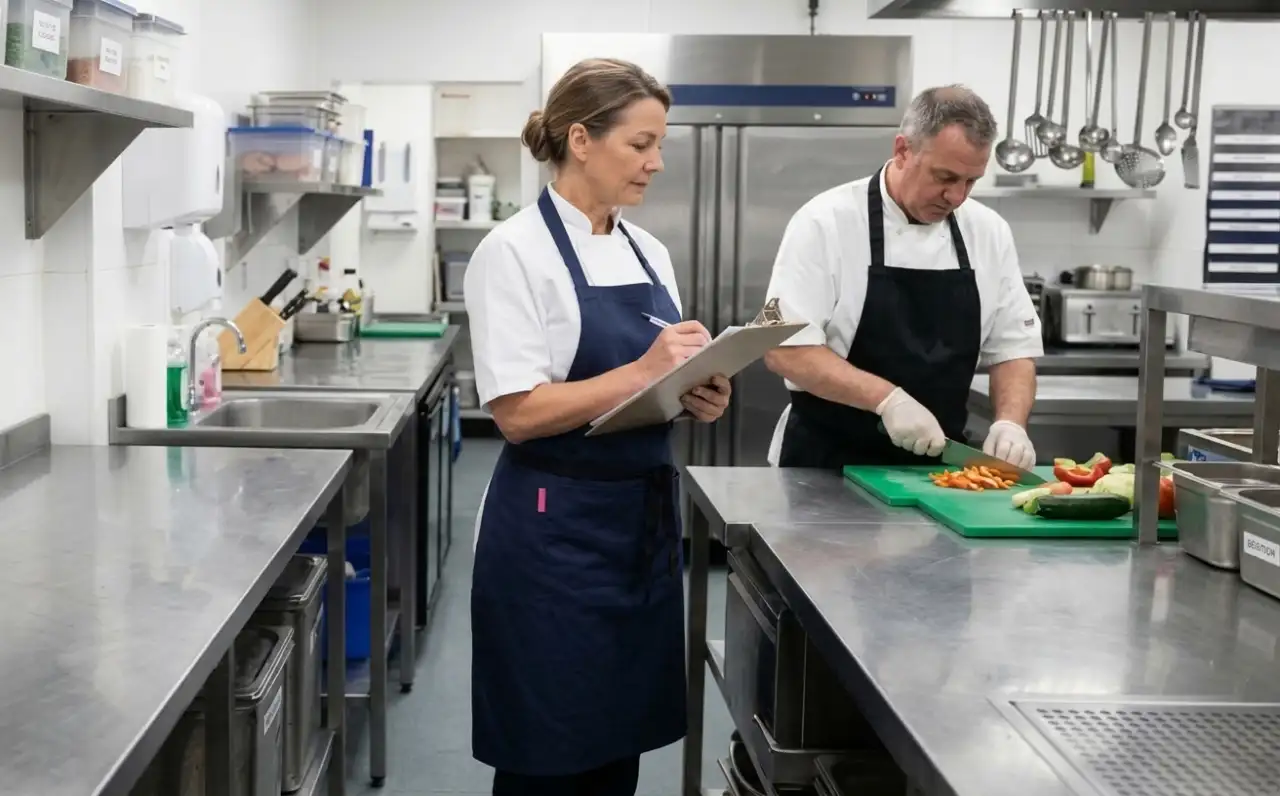
A food hygiene supervisor’s responsibilities are to help keep food safe by overseeing daily food handling, staff hygiene, cleaning, temperature monitoring and food safety records. Their role is to make sure the team follows the business’s food safety procedures, spot problems early and take appropriate action.
The exact duties depend on the workplace and the supervisor’s level of responsibility. However, most food hygiene supervisors have tasks to complete before food preparation begins, during service and at closing.
This checklist outlines the main responsibilities and explains what to do when a food safety check fails.
Ready to Strengthen Your HACCP Knowledge?
Learn about HACCP principles, food safety management, hazard analysis and critical control points through the HACCP Training Level 5 course.
What are the responsibilities of a food hygiene supervisor?
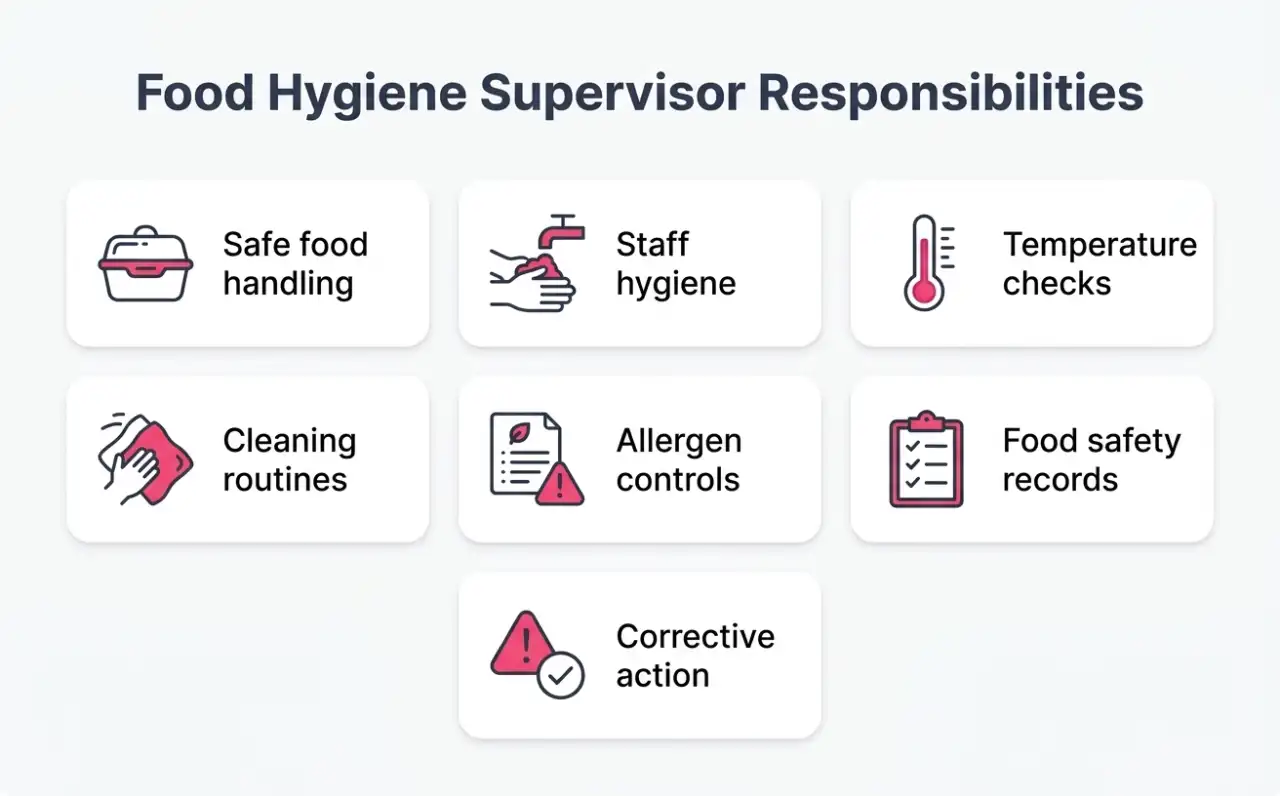
A food hygiene supervisor oversees everyday food safety practices and helps staff follow the procedures used by the business. Their responsibilities commonly include:
- Monitoring food preparation, storage and serving practices.
- Checking that staff follow personal hygiene rules.
- Overseeing temperature monitoring and cleaning tasks.
- Making sure allergen information is accurate and available.
- Maintaining or reviewing food safety records.
- Correcting unsafe practices and escalating serious concerns.
- Supporting staff with food hygiene instruction and guidance.
These operational duties support the wider responsibilities of the food business operator, who must ensure the business complies with food safety law. Supervisors may carry out delegated tasks, but their job title alone does not transfer the operator’s legal responsibilities to them.
For an overview of the wider duties, consult GOV.UK guidance on running a food business.
Supervisors need to understand the food safety system behind their daily checks. HACCP Explained: The 7 Principles With a UK Kitchen Example covers the principles that help prevent food safety hazards in a working kitchen.
Daily food hygiene supervisor responsibilities checklist
A consistent routine helps supervisors identify problems before they affect customers. The checks below should be adapted to the food safety management procedures and risks of the specific business.
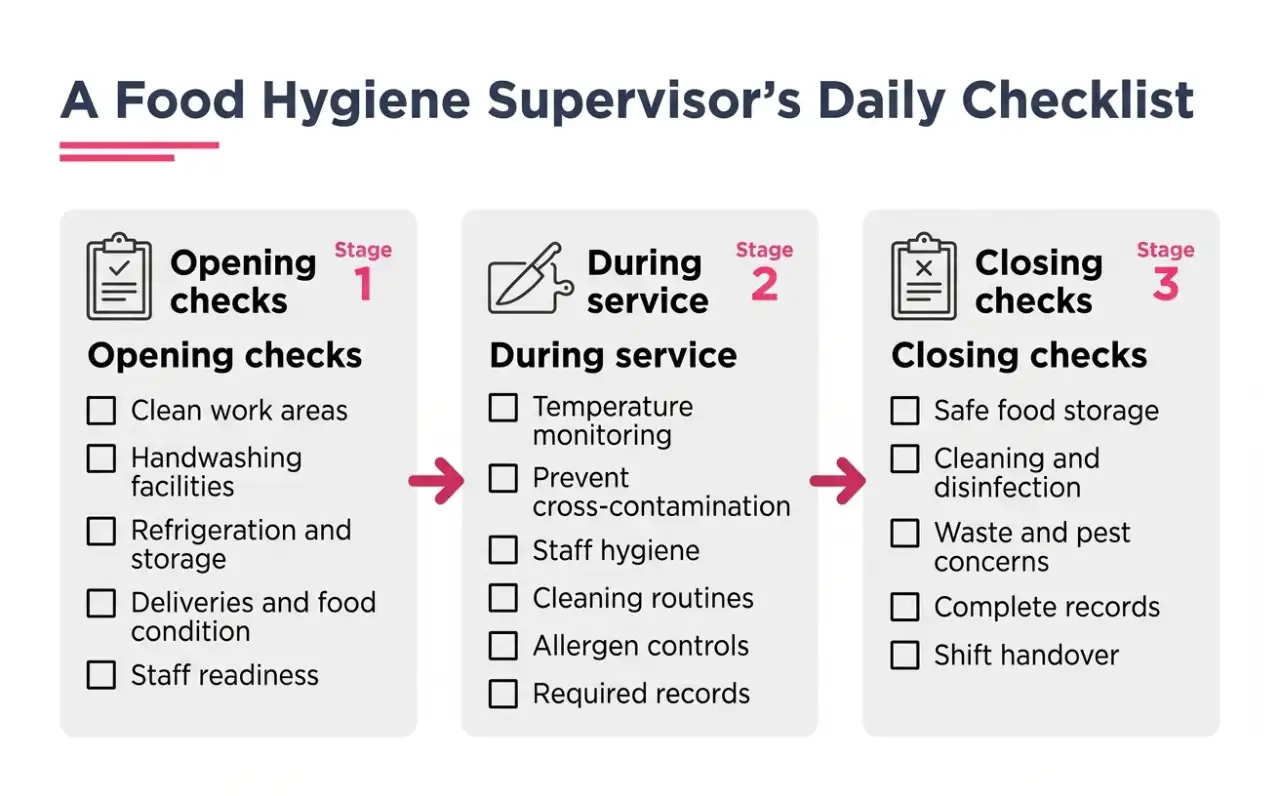
Opening checks
Before food preparation begins, the supervisor should:
- Inspect the kitchen: Check that worktops, equipment and food preparation areas are clean and in suitable condition.
- Confirm handwashing facilities are ready: Make sure staff have access to soap and hygienic hand-drying materials.
- Review refrigeration and storage: Check temperatures according to the business’s procedures and investigate readings outside the required range.
- Inspect deliveries: Confirm food is from an approved supplier, packaging is intact, and products are suitable for acceptance.
- Check food storage: Keep raw and ready-to-eat foods separated and stored safely. Confirm food is labelled and dated according to workplace procedures.
- Confirm staff readiness: Make sure staff follow hygiene rules and report illness that could affect food safety.
- Review the day’s food safety needs: Identify menu changes, allergen risks, preparation tasks and any special controls required.
Food businesses must have suitable food safety management procedures. The GOV.UK food hygiene guidance explains the importance of safe cooking, chilling, cleaning and preventing cross-contamination.
Check That the Safe Methods Match Your Food Operations
During service, the supervisor should remain alert to how food is handled and how staff follow procedures.
| Area | What the Supervisor Should Do |
|---|---|
| Temperature Control | Monitor cooking, reheating, chilling and hot or cold holding as required by the business’s procedures. |
| Cross-Contamination | Confirm raw and ready-to-eat foods, utensils and work areas are kept separate where needed. |
| Personal Hygiene | Observe handwashing, clean protective clothing and safe food-handling practices. |
| Cleaning | Make sure equipment and surfaces are cleaned and disinfected at the required times. |
| Allergen Management | Ensure staff use accurate allergen information and follow procedures to prevent allergen cross-contact. |
| Records | Complete or review required monitoring records at the frequency set by the food safety management system. |
Food safety checks are only effective when hazards are identified, controlled and monitored consistently. How to Write a HACCP Plan Step-by-Step explains how to turn those controls into a practical food safety plan.
Supervisors should not treat records as a substitute for observing work. A completed form is useful only when it reflects what actually happened.
Allergen controls also need careful attention. Staff should know where current ingredient and allergen information is kept and what to do when they cannot confirm an answer. The Food Standards Agency provides allergen guidance for food businesses.
A customer’s allergen question should never be answered by guesswork. Allergen Management and Natasha’s Law: What Food Supervisors Must Do explains how supervisors can manage allergen information and reduce cross-contact risks.
Closing checks
At the end of the shift, the supervisor should:
- Confirm food is stored safely and labelled according to workplace procedures.
- Make sure required cleaning and disinfection tasks are complete.
- Check that waste has been removed and pest risks have been reported.
- Review outstanding food safety records and complete any missing entries accurately.
- Report unresolved problems to the responsible manager.
- Hand over important food safety issues and unfinished tasks to the next shift.
A clear handover helps prevent problems from being missed when staff change. It should identify what happened, what action was taken and what still needs attention.
Businesses in England and Wales may use the Food Standards Agency’s Safer Food, Better Business resource to support food safety procedures. Businesses in Northern Ireland should refer to the FSA’s Safe Catering guidance, while those in Scotland can follow CookSafe.
A reliable closing routine helps the next shift pick up food safety tasks without missing important checks. Safer Food, Better Business (SFBB) Explained for Supervisors shows how SFBB supports everyday monitoring and record-keeping.
What should a food hygiene supervisor do when a check fails?
A failed check needs a clear response. The supervisor should follow the business’s documented corrective-action procedure rather than guessing what to do.
- Control the immediate risk. Stop the affected activity if necessary and keep potentially unsafe food from being served.
- Follow the procedure. Take the action specified in the food safety management system, such as isolating food or correcting a process.
- Escalate the issue. Inform the responsible manager or food business operator when the problem requires their attention.
- Record what happened. Document the result, action taken and any required follow-up.
- Confirm the risk is controlled. Resume the activity only when it is safe to do so under the business’s procedures.
Food safety procedures should explain how hazards are controlled and what action is needed when controls fail. The GOV.UK guidance on managing food safety provides further information.
What skills and training does a food hygiene supervisor need?
A food hygiene supervisor needs practical food safety knowledge and the ability to guide others. Important skills include:
- Recognising food safety risks and unsafe practices.
- Communicating clear instructions to staff.
- Monitoring procedures and keeping accurate records.
- Responding calmly when a check fails.
- Knowing when to correct a problem and when to escalate it.
Under UK regulations, food handlers must be supervised and instructed or trained in food hygiene commensurate with their work. While a formal certificate is not legally required by law, keeping training logs is widely recommended by the Food Standards Agency to demonstrate compliance during local Environmental Health Officer (EHO) inspections.
For people seeking structured training, Food Hygiene and Safety Level 3 is a relevant Coursegate course to consider. Review the course page for its current content and details.
Frequently Asked Questions
What is the role of a food supervisor?
A food supervisor oversees daily food safety practices, guides staff, monitors hygiene procedures, reviews required records and helps correct unsafe food handling.
What are the five duties of a food hygiene supervisor?
Five core duties are monitoring food handling, supervising staff hygiene, overseeing cleaning, checking food safety records and responding to unsafe practices.
What are the responsibilities of a food safety supervisor?
A food safety supervisor helps ensure procedures are followed, monitors hazards, supports staff training, maintains records and escalates risks requiring management action.
What are the duties of a food service supervisor?
Food service supervisors oversee safe food preparation and service, staff hygiene, cleaning, allergen controls and relevant records, alongside other operational duties.
What skills does a food service supervisor need?
Key skills include food safety knowledge, communication, organisation, observation, accurate record-keeping, staff guidance and the ability to respond appropriately to risks.
What should a supervisor do if a food safety check fails?
Control the immediate risk, follow the documented corrective-action procedure, inform the responsible person, record the incident and confirm the risk is controlled.
What records should a food hygiene supervisor review?
Depending on the business, records may include temperature monitoring, cleaning tasks, deliveries, staff training, allergen controls and corrective actions.
Who is legally responsible for food safety in a food business?
The food business operator has the relevant legal responsibilities for food safety. Supervisors may carry out delegated tasks but do not automatically replace the operator.
How often should food safety checks be carried out?
Checks should follow the business’s food safety management procedures and risk-based monitoring schedule. The appropriate frequency depends on the food, process and hazards.


- All Courses
- Accounting & Finance64
- Admin, Secretarial & PA45
- Audio Books (Audio Course)100
- Business Skills159
- Design76
- Digital Marketing49
- DIY (Do It Yourself)60
- Employability245
- Food Hygiene & Safety18
- Health & Fitness68
- Health & Safety114
- Health & Social Care191
- Human Resource51
- It & Software Skills116
- Language27
- LIFESTYLE88
- MAKEUP & BEAUTY49
- Management132
- Marketing63
- Massage & Physiotherapy18
- Microsoft Office64
- Nonprofit & Charity36
- On Demand Courses54
- Personal Development142
- Photography34
- Psychology & Counselling99
- SEN (Special Educational Needs)24
- Teaching and Education100