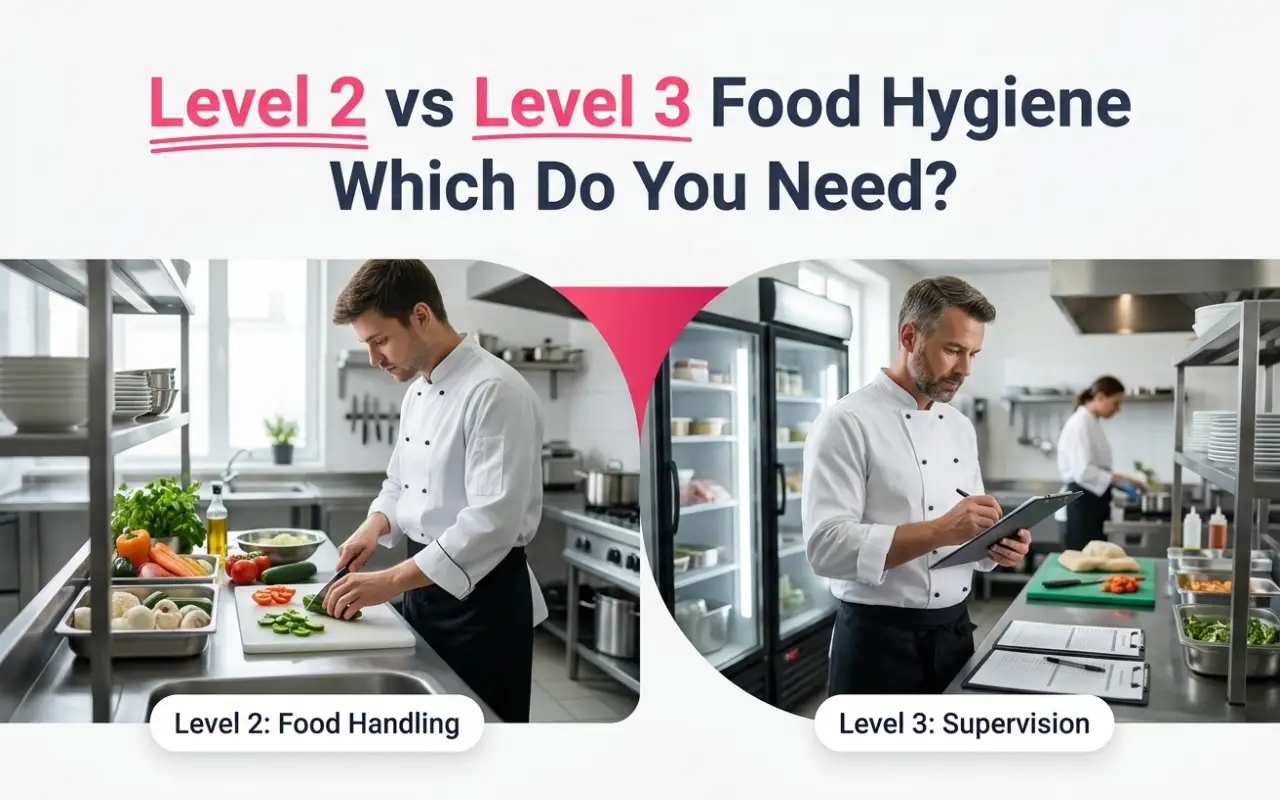
Working in a kitchen and unsure which food hygiene certificate you need? Whether you’re starting as a kitchen assistant, working as a chef or preparing to supervise a team, choosing the right training depends on your responsibilities.
Level 2 food hygiene focuses on safe food handling, including contamination prevention, personal hygiene and food storage. Level 3 food hygiene goes further, covering staff supervision, HACCP principles and food safety management. Both offer valuable knowledge, but they’re designed for different responsibilities.
Understanding the difference between Level 2 and Level 3 food hygiene can help you select suitable training for your role. For more information about advanced food safety training, see our Level 3 Food Hygiene Explained: Who Needs It, What It Covers and How to Get It.
Level 2 vs Level 3 Food Hygiene: Key Differences
The main difference between Level 2 and Level 3 food hygiene is that Level 2 focuses on handling food safely, while Level 3 focuses on supervising and managing food safety. Level 3 generally covers more detailed procedures, staff responsibilities and food safety controls.
Here’s how the two levels compare:
| Comparison | Level 2 Food Hygiene | Level 3 Food Hygiene |
|---|---|---|
| Main focus | Safe food handling | Food safety supervision and management |
| Suitable for | Food handlers and catering staff | Supervisors, managers and senior kitchen staff |
| Learning depth | Essential hygiene practices | More detailed food safety controls |
| Key subjects | Contamination, storage, cleaning and personal hygiene | HACCP, monitoring, staff supervision and safety procedures |
| Typical responsibilities | Following safe procedures | Overseeing procedures and supporting compliance |
| Legal requirement | No universal requirement for this certificate | No universal requirement for this certificate |
ccording to local authority food hygiene training guidance, Level 2 or equivalent training is generally recommended for food handlers, while supervisors and managers should aim for Level 3.
Neither certificate is automatically compulsory for every worker. The appropriate level depends on the person’s duties.
What Does Level 2 Food Hygiene Training Cover?
Level 2 Food Hygiene Training provides foundational knowledge for preparing, handling, storing and serving food safely. It focuses on applying hygiene procedures during everyday food preparation.
Who Is Level 2 Food Hygiene For?
Level 2 is generally suitable for kitchen assistants, cooks, café employees, takeaway workers and catering staff whose primary responsibilities involve food handling.
It is also a practical food hygiene course for beginners entering hospitality or catering.
What Will You Learn at Level 2?
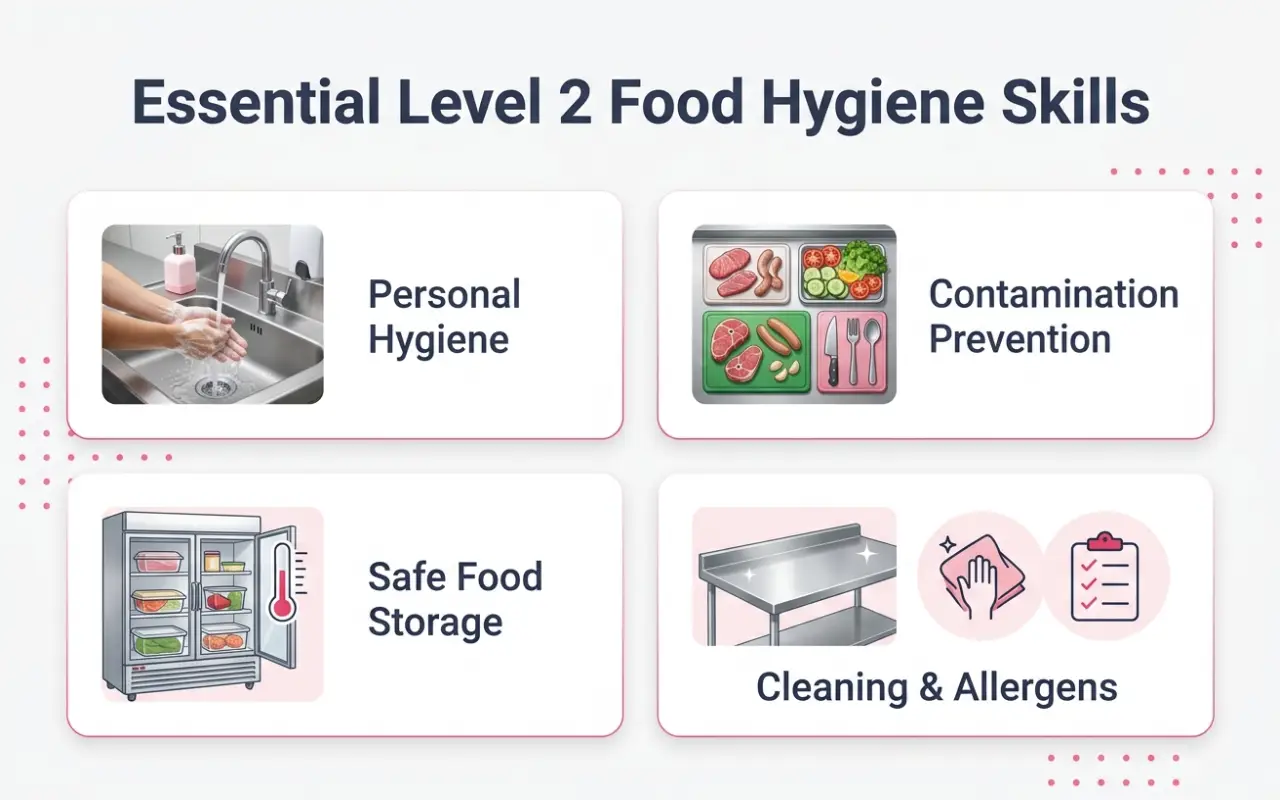
A typical Level 2 food hygiene course covers:
- Personal hygiene: Handwashing, suitable workwear and safe working habits.
- Contamination prevention: Reducing cross-contamination and foodborne illness risks.
- Food storage: Safe cooking, chilling, storage and temperature control.
- Cleaning and allergens: Maintaining hygienic equipment and understanding food allergen risks.
The focus is on carrying out food safety procedures correctly, rather than supervising how others perform them.
For those starting in food preparation, a Level 2 Food Hygiene Course can provide relevant foundational training.
What Does Level 3 Food Hygiene Training Cover?
Level 3 Food Hygiene Training develops a more detailed understanding of food safety management. It is particularly relevant when your responsibilities include supervising staff, monitoring procedures or supporting workplace compliance.
Who Is Level 3 Food Hygiene For?
Level 3 is commonly suitable for kitchen supervisors, head chefs with supervisory duties, catering managers and food business owners responsible for managing food safety.
It may also benefit experienced food handlers preparing for supervisory responsibilities.
What Will You Learn at Level 3?
A typical Level 3 food hygiene course covers:
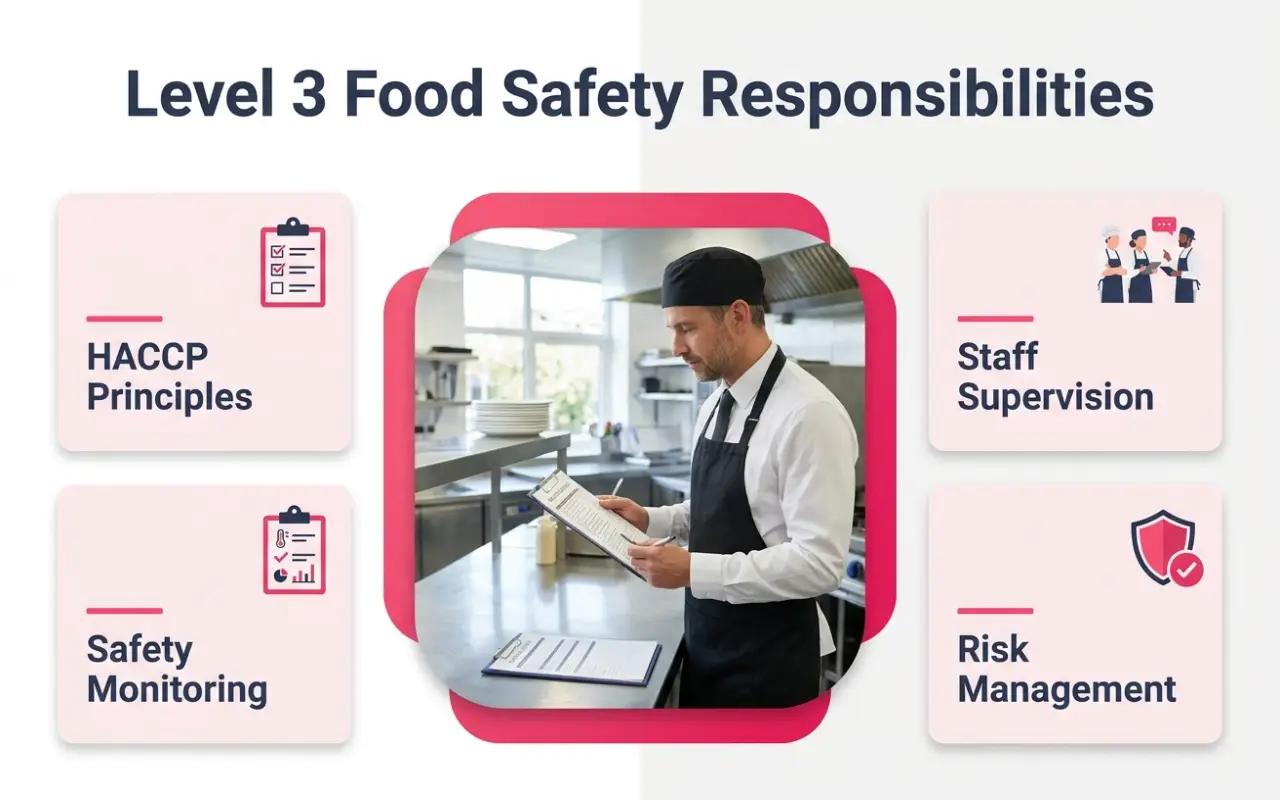
- HACCP principles: Identifying hazards and understanding food safety controls.
- Food safety management systems: Monitoring procedures and maintaining records.
- Staff supervision: Supporting colleagues with hygiene practices and training.
- Risk management: Identifying problems, taking corrective action and reviewing procedures.
For example, a food handler may record refrigerator temperatures. A supervisor may also investigate unsafe readings, review records and ensure corrective actions are followed.
This additional responsibility makes Level 3 particularly relevant to food hygiene training for supervisors and managers.
Which Food Hygiene Level Do You Need for Your Job?
Your job title alone does not determine the appropriate training level. The main consideration is whether you primarily handle food or supervise the people and procedures involved in food safety.
| Job Role | Training to Consider |
|---|---|
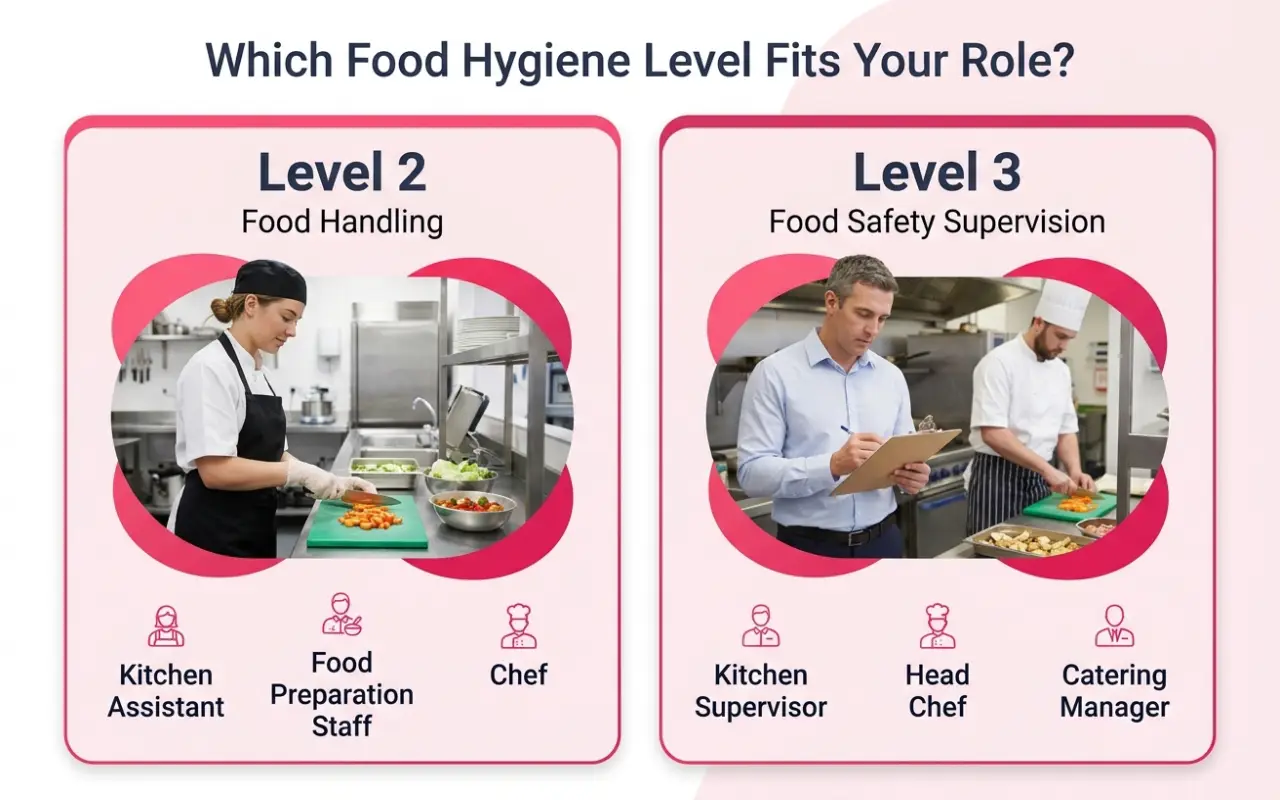
| Kitchen assistant | Level 2 |
| Food preparation worker | Level 2 |
| Chef without supervisory duties | Level 2 |
| Head chef supervising kitchen staff | Level 3 |
| Kitchen supervisor | Level 3 |
| Restaurant or catering manager | Level 3 |
| Food business owner | Level 2 or Level 3, depending on responsibilities |
Consider two chefs working in the same restaurant. One prepares meals, follows cleaning schedules and checks cooking temperatures. Level 2 food hygiene training may be suitable for these duties.
The other supervises employees, reviews food safety records and monitors compliance with kitchen procedures. Level 3 training is more relevant to these wider responsibilities.
The same principle applies across cafés, takeaways, school kitchens and catering businesses.
For more role-specific guidance, see Food Hygiene for Restaurant Staff.
Is Level 2 or Level 3 Food Hygiene Required by UK Law?
UK law does not universally require food handlers to hold a Level 2 or Level 3 food hygiene certificate. However, food businesses must ensure staff receive appropriate training, instruction and supervision.
The GOV.UK guidance on staff training confirms that businesses must be able to demonstrate that employees have suitable skills and up-to-date training for their roles.
Relevant knowledge can come from formal courses, workplace instruction, self-study or previous experience. Employers should also maintain records of staff training.
Anyone responsible for developing or maintaining HACCP-based food safety procedures must have adequate training in applying those principles.
A food safety certificate in the UK can provide evidence of completed learning, but it does not replace practical competence.
For further details about UK regulations, see Food Hygiene Certificate Requirements.
How to Choose Between Level 2 and Level 3 Food Hygiene Training
Choosing the right online food hygiene course becomes easier when you consider your daily responsibilities.
- Do you mainly prepare, handle or serve food? Level 2 is generally a suitable choice.
- Do you supervise food handlers or monitor their work? Consider Level 3.
- Do you manage food safety procedures or oversee HACCP controls? Level 3 may be more appropriate.
- Does your employer require a particular qualification? Check the exact certificate and awarding-body requirements before enrolling.

If your responsibilities involve kitchen supervision or managing food safety procedures, Course Gate’s Food Hygiene and Safety Level 3 course offers relevant online food safety training.
The course covers HACCP, contamination prevention, allergens, hygiene supervision and food safety management. Following successful completion, learners can order a CPD-accredited certificate from Course Gate. The certificate provides a record of completed professional development rather than a regulated qualification.
Can You Take Level 3 Food Hygiene Without Level 2?
Yes, you can take certain Level 3 food hygiene courses without completing Level 2 first. There is no universal requirement to hold a Level 2 certificate before progressing to Level 3 training.
However, entry requirements vary between training providers and formal qualifications.
Course Gate’s Level 3 programme has no formal entry requirements, meaning previous food hygiene qualifications are not necessary.
If you already understand basic food handling and are preparing for supervisory responsibilities, Level 3 may be an appropriate next step.
Conclusion: Which Food Hygiene Level Should You Choose?
Choosing between Level 2 and Level 3 food hygiene depends on your role and daily responsibilities. If your work mainly involves preparing, handling or serving food, Level 2 training is generally a suitable starting point for developing essential food safety knowledge.
If you supervise kitchen staff, monitor hygiene procedures or manage food safety systems, Level 3 food hygiene training may be more appropriate. It provides additional knowledge relevant to supervisory decisions, staff training and workplace food safety management.
Before enrolling, consider your duties, employer expectations and future responsibilities. The right food hygiene training in the UK should help you develop practical knowledge that you can apply confidently in your workplace.


- All Courses
- Accounting & Finance64
- Admin, Secretarial & PA45
- Audio Books (Audio Course)100
- Business Skills159
- Design76
- Digital Marketing49
- DIY (Do It Yourself)60
- Employability245
- Food Hygiene & Safety18
- Health & Fitness68
- Health & Safety114
- Health & Social Care191
- Human Resource51
- It & Software Skills116
- Language27
- LIFESTYLE88
- MAKEUP & BEAUTY49
- Management132
- Marketing63
- Massage & Physiotherapy18
- Microsoft Office64
- Nonprofit & Charity36
- On Demand Courses54
- Personal Development142
- Photography34
- Psychology & Counselling99
- SEN (Special Educational Needs)24
- Teaching and Education100