
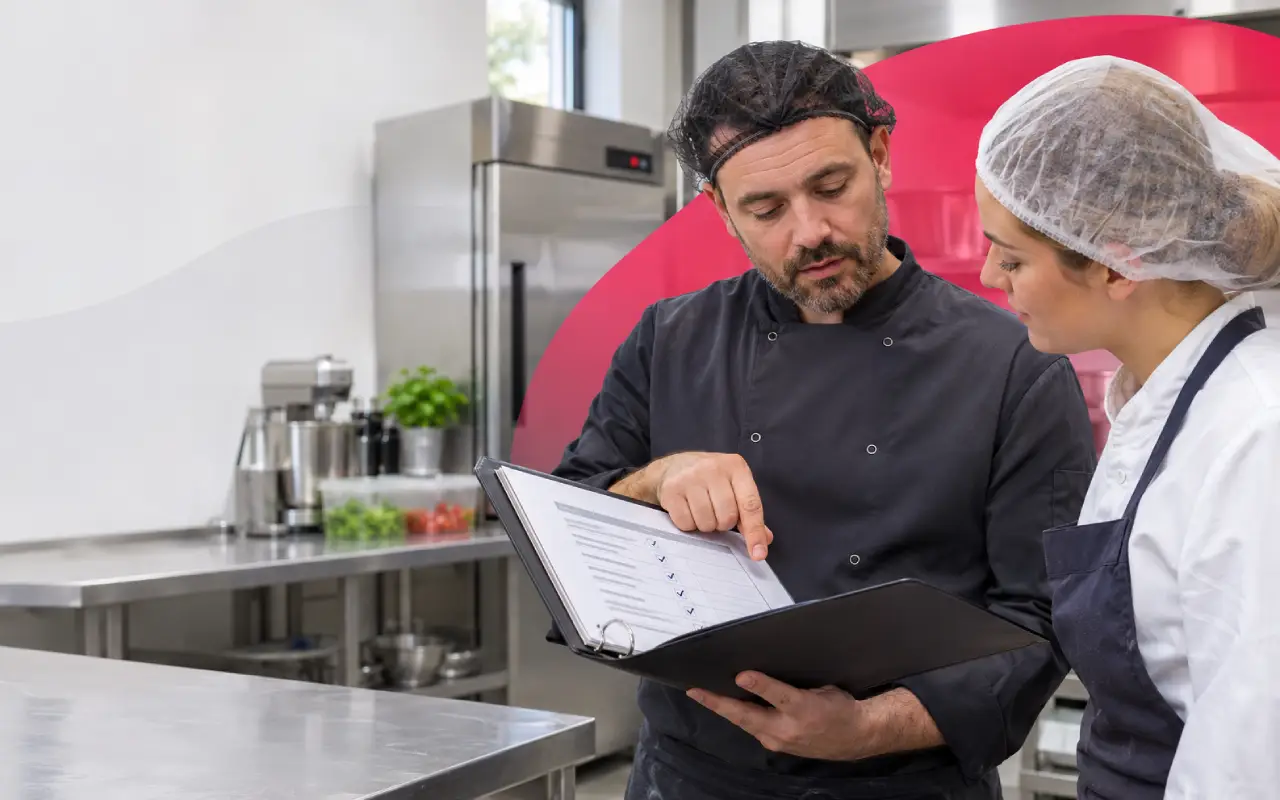
Safer Food, Better Business (SFBB) is a food safety management system developed by the Food Standards Agency (FSA) to help small food businesses manage hygiene risks. It provides safe working methods, daily diary records and regular reviews. Supervisors use these tools to check food safety practices, record problems and make improvements.
For a busy kitchen supervisor, the real challenge is making sure those procedures work throughout the day. A completed folder means little if staff are not following the agreed methods.
This guide explains how SFBB works, which pack to use, what supervisors should record and how to turn everyday checks into better food safety management.
Ready to Strengthen Your HACCP Knowledge?
Learn about HACCP principles, food safety management, hazard analysis and critical control points through the HACCP Training Level 5 course.
What Is Safer Food, Better Business (SFBB)?
Safer Food, Better Business is a practical food safety management approach created by the FSA for smaller food businesses. It helps operators identify food safety hazards, document appropriate controls and demonstrate how they manage risks.
The FSA’s main SFBB guidance is intended for businesses in England and Wales. Businesses in Northern Ireland should consult the relevant Safe Catering guidance.
The system brings together four main areas of food safety:
- Cross-contamination: Preventing harmful bacteria and other hazards from spreading between food, equipment and surfaces.
- Cleaning: Keeping food preparation areas, utensils and equipment hygienic.
- Chilling: Storing and handling chilled food safely.
- Cooking: Using appropriate methods to ensure food is cooked safely.

It also includes management procedures, training records, daily diary sheets and periodic reviews.
The FSA’s official SFBB guidance explains how businesses can select and use the relevant materials.
Is SFBB a Legal Requirement?
Using SFBB specifically is not a universal legal requirement. However, food businesses must have appropriate food safety management procedures based on Hazard Analysis and Critical Control Point (HACCP) principles.
SFBB provides a practical way for suitable smaller businesses to meet these responsibilities.
The FSA’s food safety management requirements explain the need for documented procedures, appropriate records and regular reviews.
Businesses may use other suitable food safety management systems where appropriate.
SFBB simplifies the application of HACCP for smaller operations. For a clearer understanding of the seven HACCP principles and how they apply in a UK kitchen, refer to our dedicated guide.
Which SFBB Pack Should Your Business Use?
Different food businesses face different risks. A small café, convenience shop and specialist takeaway may not need identical procedures.
The FSA provides several SFBB packs designed for specific business activities.
| Food Business | Relevant SFBB Pack |
|---|---|
| Restaurants, cafés and takeaways | SFBB for Caterers |
| Convenience stores and small food retailers | SFBB for Retailers |
| Businesses preparing Indian, Pakistani, Bangladeshi or Sri Lankan cuisine | SFBB for Indian Cuisine |
| Chinese restaurants and takeaways | SFBB for Chinese Cuisine |
| Childminding settings | SFBB for Childminders |
| Small residential care homes preparing meals | Relevant SFBB pack with residential care supplement |
Supervisors should choose the pack that reflects their business and review its safe methods against actual operations.
For example, a takeaway offering additional menu items may need to review its existing procedures to ensure that new food safety risks are controlled.
Businesses can obtain the SFBB packs for caterers and other relevant resources free from GOV.UK.
SFBB is not necessarily suitable on its own for every operation. More complex processes may require additional documented controls.
How Should Supervisors Use SFBB Safe Methods?
An SFBB pack becomes useful when its safe methods are understood, followed and checked during normal operations.
Check That the Safe Methods Match Your Food Operations
Start by reviewing the food your business prepares, stores and serves.
A café preparing sandwiches and cooked meals may need procedures covering chilled storage, food preparation, cooking, cleaning and preventing cross-contamination.
Supervisors should:
- Identify which safe methods apply to their activities.
- Complete the relevant safe-method information.
- Check that equipment and facilities support the procedures.
- Review controls when menus, ingredients or working methods change.
- Ensure staff know where the relevant instructions are kept.
Supervisors must also address allergen management responsibilities, including preventing allergen cross-contact, providing accurate allergen information and ensuring staff understand the relevant procedures.
Make Sure Staff Follow the Agreed Procedures
Documenting a safe method does not mean it is being followed.
Supervisors need to observe working practices, provide appropriate instructions and respond when something goes wrong.
For example, if staff repeatedly leave equipment unclean after use, simply reminding them may not resolve the problem. The supervisor should check whether instructions, equipment, workload or training contribute to the issue.
The wider scope of food hygiene supervisor responsibilities includes staff supervision, routine checks and managing workplace risks.
The food business operator remains responsible for ensuring appropriate food safety management arrangements are in place, even when daily checks are delegated.
How Do You Complete the SFBB Diary?
The SFBB diary records how a business manages its food safety procedures during everyday operations.
It provides evidence that safe methods have been followed and that problems have been addressed.
What Supervisors Should Record Each Day
The standard diary format includes opening checks, closing checks, space for problems or changes, and the responsible person’s name and signature.
The nominated person should complete the relevant daily entries and confirm that the business’s safe methods have been followed and effectively supervised.
A typical diary process involves:
- Opening checks: Confirm that the required checks have been completed before food operations begin.
- Monitoring: Ensure staff follow the documented safe methods during service.
- Recording exceptions: Note any problems, unusual events or changes and explain the action taken.
- Closing checks: Confirm that the required end-of-day checks have been completed.
- Signing the record: Enter the responsible person's name and signature as directed by the form.

Not every successful routine check needs a lengthy written explanation. The diary uses a practical approach often described as recording by exception, where unusual events and corrective actions are documented.
However, required checks, signatures and any separate records must still be completed.
If a supervisor is absent, responsibility may be delegated to a suitably instructed staff member.
How Long Should You Keep SFBB Diary Records?
The FSA advises businesses to retain completed diary pages safely until their next local authority food safety visit.
Records can be kept electronically or in printed form.
Supervisors can access the official SFBB diary sheets and download additional pages when needed.
Keep records organised and accessible so an authorised food safety officer can review them.
Other recordkeeping requirements may apply to particular foods, processes or businesses. The SFBB diary does not automatically replace those obligations.
Practical Example: Recording a Food Safety Problem
Consider a fictional café preparing sandwiches, salads and cooked lunches.
During an opening check, a supervisor notices that the display refrigerator is warmer than the business’s established safe operating limit.
The supervisor should not simply adjust the equipment and record that everything is satisfactory.
From Identifying a Problem to Recording Corrective Action
A sensible response would involve:
- Stopping use of the affected refrigerator until its safety has been assessed.
- Checking the affected food against the business's food safety procedures, including relevant time and temperature information.
- Withholding food from sale where its safety cannot be established.
- Arranging appropriate corrective action, such as equipment inspection or repair.
- Recording what happened, what was done and any necessary follow-up.
An illustrative SFBB diary entry might read:
Problem: Display refrigerator above the established operating limit during opening checks.
Action taken: Affected food withheld from sale while its safety was assessed. Refrigerator taken out of use and maintenance arranged. Staff instructed to use approved alternative storage.
Follow-up: Confirm safe operation before returning the refrigerator to service. Review the cause and any necessary changes.
This is a fictional example, not an official completed SFBB form.
Actual decisions about food safety must follow the relevant FSA guidance and the business’s documented procedures.

The important lesson is that the diary should show both the problem and the response. Recording an issue without addressing the risk does not demonstrate effective food safety management.
Businesses using more complex processes may also need additional documentation. Guidance on writing a HACCP plan can help explain those broader arrangements.
What Is the SFBB Four-Weekly Review?
The SFBB four-weekly review helps managers look back at recent records, identify recurring problems and decide whether existing procedures need improving.
Daily checks identify immediate issues. The four-weekly review provides an opportunity to assess patterns.
What Supervisors Should Check During the Review
Review diary entries from the previous four weeks and consider:
- Have the same problems happened repeatedly?
- Were corrective actions effective?
- Do staff need additional instruction or training?
- Have menus, ingredients, suppliers or equipment changed?
- Are the documented safe methods still appropriate?
The review should record significant findings, planned improvements and relevant follow-up actions.
For example, if the café’s refrigerator develops repeated faults, the review should consider whether repairs resolved the problem or whether further equipment replacement, monitoring or procedural changes are needed.

The FSA provides review and recordkeeping resources that help explain diary use and periodic reviews.
A four-weekly review does not replace daily monitoring. Serious food safety problems must be addressed when identified, not left until the next review.
How Can SFBB Help With Food Hygiene Inspections?
A properly maintained SFBB pack can help demonstrate how a business manages food safety.
During an inspection, an Environmental Health Officer may examine food handling practices, staff knowledge, cleaning arrangements, food safety procedures and records.
Supervisors should ensure that the pack reflects what happens in the workplace.
Three common problems to avoid are:
- Outdated procedures: Safe methods no longer match current food operations.
- Incomplete records: Diary entries or required checks are regularly missing.
- Unresolved issues: Repeated problems appear without evidence of corrective action.
The government’s food safety inspection guidance explains the areas local authorities examine.
Using SFBB does not guarantee a five-star food hygiene rating. Inspectors assess actual hygiene standards, premises and confidence in food safety management.
Accurate records support that assessment, but they cannot replace safe working practices.
Strengthen Your Food Safety Supervision Skills
Supervisors need sufficient knowledge to recognise risks, guide staff and maintain effective food safety procedures.
Coursegate’s Food Hygiene and Safety Level 3 course covers food safety management systems, HACCP, contamination control, temperature monitoring and hygiene supervision.
The online course offers CPD-accredited training, with an optional CPD certificate available after successful completion for an additional fee.
It can support professional knowledge development, but it is not presented as an Ofqual-regulated qualification or a guarantee of legal compliance.
Final Thoughts
Safer Food, Better Business works best when it reflects how food is actually prepared, stored and served.
For supervisors, the priority is not simply completing paperwork. It is checking that safe methods are followed, responding promptly to problems and using records to identify improvements.
Start by confirming that your business has the appropriate SFBB pack. Check that its procedures remain relevant, that diary responsibilities are clear and that reviews lead to action.
A food safety system should help people make better decisions every day, not just provide documents for an inspection.
Frequently Asked Questions
01 Is Safer Food, Better Business a Legal Requirement?
No. Food businesses must have appropriate food safety management procedures based on HACCP principles, but SFBB itself is not universally compulsory. It is one practical approach suitable for many smaller food businesses.
02 Who Is Responsible for Completing the SFBB Diary?
The person responsible for running the business, or a suitably instructed nominated member of staff, should complete the relevant daily diary entries. The food business operator retains overall responsibility for appropriate food safety arrangements.
03 Can an SFBB Diary Be Completed Electronically?
Yes. The Food Standards Agency allows businesses to download, complete and store SFBB diary pages electronically. Printed records are also acceptable. Keep completed pages organised and accessible for inspection.
04 What Happens During an SFBB Four-Weekly Review?
The supervisor or manager examines recent diary records, identifies recurring problems and reviews changes affecting food safety. The review should document significant findings, corrective actions and improvements needed.
05 Does Using SFBB Guarantee a Five-Star Food Hygiene Rating?
No. A completed SFBB pack does not guarantee any particular rating. Food hygiene ratings reflect the standards found during inspection, including food handling, premises and food safety management.
06 Does SFBB Replace Food Hygiene Training?
No. SFBB provides procedures and resources that support food safety management. Staff must still receive suitable training, instruction or supervision for their duties. A formal food hygiene certificate is not universally required, but workers must be competent for their roles.


- All Courses
- Accounting & Finance64
- Admin, Secretarial & PA45
- Audio Books (Audio Course)100
- Business Skills159
- Design76
- Digital Marketing49
- DIY (Do It Yourself)60
- Employability245
- Food Hygiene & Safety18
- Health & Fitness68
- Health & Safety114
- Health & Social Care191
- Human Resource51
- It & Software Skills116
- Language27
- LIFESTYLE88
- MAKEUP & BEAUTY49
- Management132
- Marketing63
- Massage & Physiotherapy18
- Microsoft Office64
- Nonprofit & Charity36
- On Demand Courses54
- Personal Development142
- Photography34
- Psychology & Counselling99
- SEN (Special Educational Needs)24
- Teaching and Education100